
Stepping into the private security industry offers a dynamic career path filled with responsibility, public interaction, and constant variety. As public spaces become busier and event 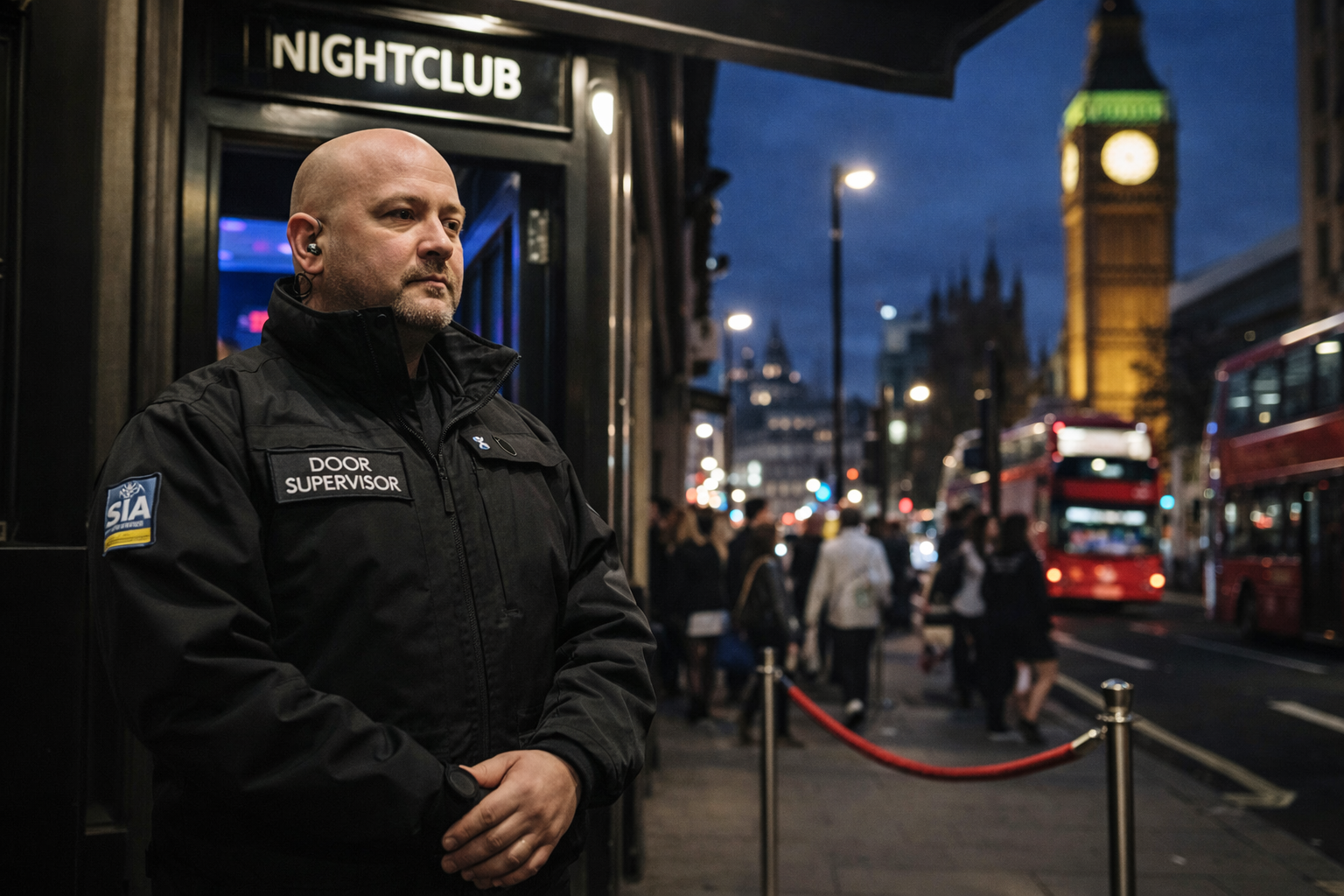 regulations grow stricter, the demand for trained security professionals continues to climb. If you have excellent communication skills, a calm demeanour under pressure, and a sharp eye for detail, this sector can provide steady work and fantastic progression opportunities.
Entering this field requires specific training, background checks, and official licensing. The process guarantees that everyone working on the front lines of public safety has the knowledge to manage conflict, administer first aid, and uphold the law. It is a highly regulated profession that commands respect and demands professionalism.
This comprehensive guide covers everything you need to know about starting your career in the security industry. You will learn exactly what the role involves, the mandatory qualifications you must complete, the steps to secure your official licence, and the diverse career paths available once you qualify.
What is a door supervisor?
A door supervisor is a licensed security professional responsible for ensuring the safety and security of customers, staff, and premises. While people historically used the term “bouncer” to describe security staff outside nightclubs, a modern door supervisor is a highly trained, legally recognised operative. They assess the suitability of individuals entering a venue, maintain public order, and manage potential risks before they escalate.
Core duties and essential skills
The daily responsibilities of a door supervisor vary significantly depending on the venue. Common duties include managing crowds and queues, checking identification and tickets, conducting bag searches, and screening people upon entry. Operatives also patrol venues, monitor customer behaviour to identify potential conflicts, and respond swiftly to emergencies. They work closely with venue management, emergency first aiders, and the police to ensure a secure environment.
Succeeding in this role relies heavily on specific interpersonal skills rather than sheer physical size. Effective door supervisors excel at communication, negotiation, and conflict de-escalation. They must remain calm under immense pressure, applying situational awareness to spot trouble before it starts. While physical intervention is sometimes necessary, it is always considered a last resort after verbal resolution tactics have failed.
The door supervisor job description
When you apply for roles in this sector, you will find that the job description changes based on the employer. A door supervisor working at a busy city centre nightclub will face different challenges than one stationed at a corporate event or a retail centre.
In hospitality settings like bars and nightclubs, the focus is on licensing laws, age verification, and managing intoxicated patrons safely. Retail security roles, on the other hand, focus heavily on loss prevention, apprehending shoplifters, and providing a visible deterrent to theft. Event and festival security involves large-scale crowd control, ticket verification, and guiding members of the public safely through massive venues. Regardless of the specific setting, the core objective remains the same: protecting property and preserving public safety through vigilant observation and professional conduct.
Qualifications and training: The first steps
Before you can legally work in this capacity, you must complete an SIA licence-linked qualification. The mandatory course is the Level 2 Award for Door Supervisors in the Private Security Industry.
Understanding the Level 2 Award course
This qualification is typically delivered over six consecutive days. It combines theoretical knowledge with practical assessments, totalling around 52 guided learning hours. The programme is split into four distinct modules designed to equip you with every skill needed on the job.
Unit 1 covers working in the private security industry, focusing on health and safety, fire awareness, emergency procedures, and the legal aspects of security work. Unit 2 delves specifically into the door supervisor role, teaching you about civil and criminal law, search procedures, drug awareness, and licensing laws. Unit 3 focuses on conflict management, teaching you how to avoid, defuse, and resolve disputes safely. Finally, Unit 4 covers physical intervention skills, providing practical training on how to protect yourself and others safely and legally when verbal de-escalation is not enough.
Mandatory first aid requirements
You cannot begin the door supervisor training without a valid first aid qualification. Specifically, you must hold an Emergency First Aid at Work (EFAW) certificate, or an equivalent qualification, before stepping into the classroom. This ensures that every licensed security operative on the ground has the basic medical knowledge required to assist the public during a crisis or accident.

Understanding the SIA licence
To work legally in the UK, you must hold a frontline licence issued by the Security Industry Authority (SIA). Operating without this licence is a criminal offence.
Application process and fees
To be eligible for the licence, you must be at least 18 years old, possess the right to work in the UK, and pass the necessary training course. The SIA also requires applicants to pass an enhanced background check to verify their criminal record history in accordance with British Industry Standards. Minor offences from the distant past will not necessarily disqualify you, but recent or serious convictions often will.
Once you pass the Level 2 course, you apply directly through the SIA website. The application process usually takes between two to six weeks. The standard application fee is £184, owing to a temporary £20 rebate scheme. However, from 1 April 2026, this rebate will end, and the cost of applying for any sector licence will return to the full £204.
Renewals and Top-Up training
An SIA licence is valid for three years. When the time comes to renew, you cannot simply pay a fee; you must prove your skills remain current. The SIA frequently updates its training standards to reflect new laws and physical intervention techniques.
As of 1 April 2025, the SIA introduced mandatory refresher training. You must complete a Top-Up qualification before you can renew your badge. Additionally, if your first aid certificate has expired, you will need to complete another EFAW course before your renewal can be processed.
Everything you can do with a door supervisor badge
One of the biggest advantages of obtaining a door supervisor licence is its versatility. While a standard Security Guard licence only allows you to work in manned guarding roles (such as monitoring empty warehouses or office buildings), a door supervisor badge covers both licensed venues and standard guarding duties.
This qualification opens the door to numerous environments. You can work in retail loss prevention, tracking and stopping theft in high street stores. You can transition into event security, managing crowds at major music festivals or sporting events. Mobile patrol security is another option, involving driving between different commercial properties to deter crime. You can even find work in airport security, assisting with luggage searches, passenger screening, and emergency response protocols.
Salary expectations and career progression
The earning potential in the private security sector varies based on your location, experience, and the specific role you undertake. Entry-level operatives generally earn between £11 and £15 per hour. The average salary across the UK sits at roughly £14.12 per hour, which translates to an annual income of £25,000 to £30,000 for full-time workers.
As you gain experience, your earning potential increases significantly. Experienced security officers managing complex venues or teams can earn up to £23 per hour. Furthermore, the career progression opportunities are excellent. Many operatives start on the doors before moving into management roles, becoming head door supervisors, or transitioning into CCTV control room operations. Those who pursue further training can enter the lucrative field of Close Protection (bodyguarding), where experienced officers can earn £200 to £300 per shift. Some experienced professionals eventually launch their own private security firms, supplying trained staff to venues across the country.
Take the next step in your security career
Becoming a licensed door supervisor is a challenging, highly rewarding process that opens up a wealth of employment opportunities across multiple sectors. By understanding the legal requirements, completing the mandatory Level 2 Award and first aid training, and passing the SIA background checks, you can establish yourself in a respected and vital profession.
If you are ready to start this journey, your first action should be locating an approved training provider in your area. Book your Emergency First Aid at Work course, secure your place on a six-day door supervisor training programme, and take the first step toward a flexible and fast-paced career in private security.
